

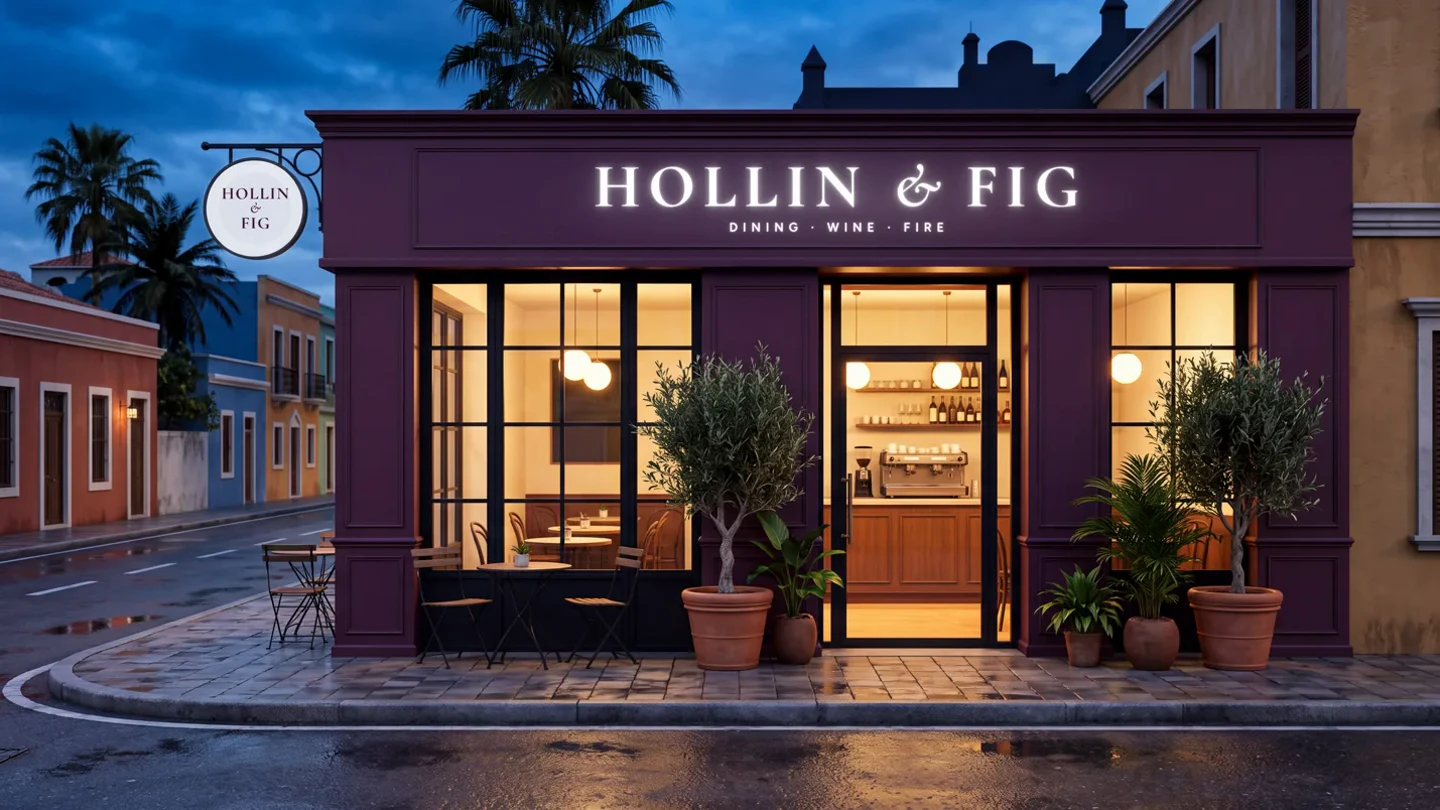
People choose where to eat on their phones, so the first taste of your café is a photograph, a menu and a map.
The camera eats first
Before a guest smells the coffee, they have usually seen it. They found you on a map, scrolled your photographs and looked for your menu, often while deciding between you and the place next door. Branding for cafés and restaurants is the work of making that first taste on a screen as good as the one at the table.
We eat with our eyes
Research on food and the senses shows that what we see shapes what we expect to taste, and how much we enjoy it (Spence and colleagues, 2016). In one study, the same salad arranged to look like a painting by Kandinsky was rated tastier than the same ingredients served tossed or neatly arranged, and diners were willing to pay more for it (Michel and colleagues, 2014). The way you light, plate and photograph your food is not decoration. It is part of the flavour.
Your map listing is your shop window
For many guests, your map listing is the first and only page they see. Google says customers are more likely to visit, and to consider buying from, businesses with a complete Business Profile (Google Business Profile). Keep your hours, photographs, menu link and phone number current, and answer reviews kindly and promptly.
A menu made for the phone
A menu that only exists as a blurred photograph, or as a PDF that needs pinching and zooming, loses guests at the door. Put it on a simple page with clear sections, honest descriptions and prices that are easy to find. In a study at one restaurant, researchers at Cornell found that guests spent more when prices were written as plain numbers, without a dollar sign (Yang, Kimes and Sessarego, 2009).
Make the room match the photographs
What guests see on a screen, they expect to find in the room. Research in gastrophysics shows that light, music and even the weight of the cutlery change how food is experienced (Spence, 2017). Photograph the room as it feels at its best hour, and then make sure every visit feels like that photograph.
Where cafés leak guests
- Opening hours that differ between the door, the website and the map.
- A menu that only exists as a PDF or a blurred photograph.
- Photographs taken in poor light, or of dishes you no longer serve.
- No way to order ahead or book from a phone.
- Reviews left unanswered.
- A feed with no consistent look, so nobody recognises it mid-scroll.
A ten-point visit audit
- Are your hours the same on your door, your website and your map listing?
- Can a guest read your whole menu on a phone without zooming?
- Are your prices easy to find and calm to read?
- Are your photographs taken in good light, of food you serve today?
- Can guests order ahead or book in two taps?
- Does your feed share one look, so it is recognisable at a glance?
- Do you answer reviews, kindly and within a few days?
- Is your signature dish or drink obvious within ten seconds?
- Does the room look and feel like your photographs?
- Would a hungry stranger choose you from the first screen?
Questions, answered
Do we need professional photography?
You need consistent, well-lit photography. Good equipment helps, but light, styling and a clear look matter more than the price of the camera.
Should we post every day?
Post as often as you can keep the quality and the look consistent. A smaller feed that people recognise beats a busy one they scroll past.
Do we still need a website if we have Instagram?
Yes. A simple site with your menu, hours, location and ordering is the page you control, and it is the one that search results and maps can send people to.
Want to see your café the way a hungry stranger does? Book a Brand Evolution Session, and we will run this audit together.
Sources
- Google. Google Business Profile. business.google.com.
- Michel, C., Velasco, C., Gatti, E. and Spence, C. (2014). A taste of Kandinsky: assessing the influence of the artistic visual presentation of food on the dining experience. Flavour, 3(7).
- Spence, C. (2017). Gastrophysics: The New Science of Eating. Viking.
- Spence, C., Okajima, K., Cheok, A. D., Petit, O. and Michel, C. (2016). Eating with our eyes: from visual hunger to digital satiation. Brain and Cognition, 110.
- Yang, S. S., Kimes, S. E. and Sessarego, M. M. (2009). $ or dollars: effects of menu-price formats on restaurant checks. Cornell Hospitality Report, 9(8).